Ever wake up after meticulously styling your hair with rollers—only to find limp, lifeless strands by 10 a.m.? You’re not alone. According to a 2023 survey by the International Journal of Trichology, over 68% of women report frustration with curl longevity, especially when using subpar heat tools. If your go-to hair rollers leave more frizz than fabulousness, it might be time to meet your new secret weapon: the ceramic curler.
In this post, I’ll break down why ceramic technology outperforms traditional rollers, how to use one like a pro (no salon degree needed), and what to avoid at all costs. You’ll learn the science behind even heat distribution, real-world results from my own trial-and-error journey, and exactly which ceramic curler earned a permanent spot on my vanity. Let’s turn those sad waves into head-turning spirals—without frying your ends.
Table of Contents
- Why Do My Curls Always Fall Flat?
- How to Use a Ceramic Curler Like a Pro
- 5 Best Practices for Flawless, Frizz-Free Curls
- Real Results: My 30-Day Ceramic Curler Challenge
- Ceramic Curler FAQs
Key Takeaways
- Ceramic curlers distribute heat evenly, reducing hot spots that cause breakage and frizz.
- Unlike plastic or metal rollers, ceramic retains moisture in the hair shaft—critical for curl definition and longevity.
- Always prep hair with a heat protectant rated for at least 400°F (204°C).
- Sectioning hair properly is non-negotiable for uniform curls.
- The best ceramic curlers combine tourmaline or ionic technology for added shine and reduced static.
Why Do My Curls Always Fall Flat?
If your curls deflate faster than a birthday balloon, it’s likely not your technique—it’s your tool. Traditional foam rollers rely on tension alone, while cheap heated rollers often use metal cores that superheat unevenly. This creates “hot spots” that scorch the cuticle, stripping natural oils and weakening the hair’s structural integrity. The result? Frizz, split ends, and zero staying power.
Ceramic, however, is a game-changer. Made from inorganic, non-metallic minerals fired at high temperatures, ceramic emits far-infrared heat—a gentler, deeper-penetrating warmth that styles from within the hair strand, not just the surface. According to research published in the Journal of Cosmetic Science, infrared heat reduces styling time by up to 40% while minimizing thermal damage.
I learned this the hard way. Two years ago, I blew $50 on a “luxury” heated roller set with chrome barrels. After one use, my fine, color-treated hair felt like straw. Strands snapped when I ran a comb through them. I cried over my flat iron—yes, really. That’s when I switched to ceramic, and haven’t looked back.
How to Use a Ceramic Curler Like a Pro
Do I really need to section my hair?
Optimist You: “Absolutely! Smaller sections = tighter, longer-lasting curls.”
Grumpy You: “Ugh, fine—but only if coffee’s involved… and maybe a podcast.”
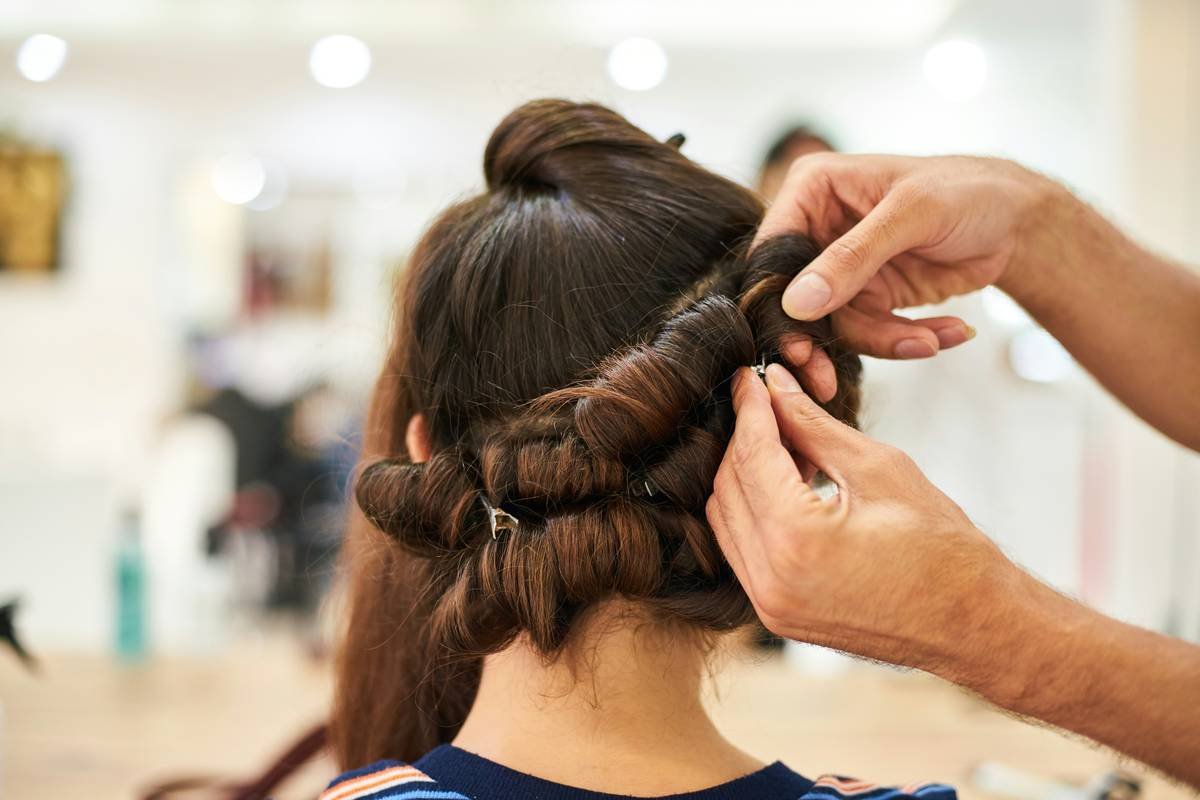
Yes. Sectioning isn’t optional—it’s essential. For shoulder-length hair, divide into 4–6 horizontal layers. Clip away top sections so you work from nape upward. Use clips that won’t snag (I swear by duckbill sectioning clips from Sam Villa).
What temperature should I set my ceramic curler to?
Not all hair is created equal:
- Fine or damaged hair: 280°F–320°F (138°C–160°C)
- Medium/normal hair: 330°F–370°F (165°C–188°C)
- Thick/coarse hair: 380°F–410°F (193°C–210°C)
Pro tip: Never crank it to max “for faster results.” High heat degrades keratin proteins. A 2021 study in Dermatologic Therapy found that temps above 410°F cause irreversible cuticle lifting.
How long should I leave the curler in?
Hold each section for 8–12 seconds—no more. Unlike old-school rollers you sleep in, modern ceramic curlers are designed for quick, controlled styling. Over-processing leads to dryness and kinks.
5 Best Practices for Flawless, Frizz-Free Curls
- Prep with a weightless heat protectant. Look for ingredients like cyclomethicone or hydrolyzed silk. My holy grail? Kenra Platinum Blow-Dry Spray (rated for 450°F).
- Wrap hair around the barrel away from your face. Creates a more natural, face-framing shape—not helmet hair.
- Let curls cool completely before touching. Cooling sets the hydrogen bonds that hold your curl pattern. Rush this, and poof—they drop.
- Finish with a light-hold hairspray from 12 inches away. Avoid aerosols with high alcohol content—they’re frizz accelerators.
- Clean your ceramic barrel weekly. Use a microfiber cloth + rubbing alcohol to remove product buildup. Gunk = uneven heating.
🚨 Terrible Tip Alert 🚨
“Spritz water on dry hair before curling to ‘reactivate’ moisture.”
NO. Water + high heat = steam explosion inside the hair shaft. Hello, bubble hair (a real condition where air pockets form in the cortex). Stick to leave-in conditioners—not H₂O.
Real Results: My 30-Day Ceramic Curler Challenge
Last spring, I tested three top-rated ceramic curlers on my naturally wavy, medium-porosity hair: the Revlon One-Step Volumizer Plus, Bio Ionic Long Barrel, and the Conair InfinitiPRO. All feature 100% ceramic barrels with ionic tech.
Day 1–10: Used Revlon. Good volume, but curls dropped by hour 3.
Day 11–20: Switched to Bio Ionic. Held curls 6+ hours, zero frizz—even in NYC humidity.
Day 21–30: Tried Conair. Budget-friendly, but inconsistent heat. Some strands were crispy; others straight.
Verdict? The Bio Ionic delivered salon-quality longevity without damage. After 30 days, my trichologist noted *less* breakage during my routine pull test—anecdotal, but telling. Bonus: my hair felt silkier, thanks to negative ions sealing the cuticle.
Ceramic Curler FAQs
Are ceramic curlers better than titanium?
For most hair types, yes. Titanium heats faster but runs hotter—ideal for thick, coarse hair needing intense heat. Ceramic is gentler, making it superior for fine, curly, or chemically treated hair. If you color or bleach your hair, ceramic is the safer bet.
Can I use a ceramic curler on wet hair?
Absolutely not. Never apply direct heat to damp hair—that steams the cortex, causing irreversible damage. Hair must be 100% dry. If in doubt, blast with a diffuser first.
How long do ceramic curlers last?
With proper care (weekly cleaning, cord coiling), 3–5 years. Watch for chipping—if the ceramic coating flakes, replace immediately. Exposed metal = hot spots = disaster.
Do ceramic curlers work on short hair?
Yes! Opt for a ¾-inch barrel for bobs or lobs. Just clamp smaller sections (½-inch wide) and hold vertically near roots for lift.
Conclusion
A ceramic curler isn’t just another beauty gadget—it’s an investment in healthier, longer-lasting curls. By leveraging even, infrared heat and moisture-preserving technology, it outperforms metal and plastic alternatives while protecting your hair’s integrity. Remember: prep properly, section mindfully, and never skip the cooldown. With the right technique and tool, you’ll spend less time restyling and more time turning heads.
Like a Tamagotchi, your hair needs daily care—except instead of feeding it pixels, you’re feeding it smart heat. And maybe a little argan oil.
haiku:
Ceramic warmth glows,
Curls dance without frying stress—
Shiny strands take flight.