Ever spent 45 minutes wrapping your hair around a curling iron only to watch those bouncy spirals surrender into sad, limp waves before you even finish your coffee? You’re not alone—and it’s probably not your technique. It’s your curling barrel.
In this guide, we’ll cut through the fluff (pun intended) and dive deep into how choosing the right curling barrel—diameter, material, heat settings, and more—can be the difference between “meh” hair and red-carpet-worthy volume that lasts all day. As a former salon stylist turned beauty editor with over 12 years of hands-on experience (and countless burned fingertips), I’ve tested every barrel under the sun—from ceramic to titanium, 0.5” to 2”. You’ll learn:
- How barrel size directly impacts curl type and longevity
- Which materials protect your hair vs. fry it
- Pro styling hacks for natural-looking, frizz-free curls
- Real mistakes I made (so you don’t have to)
Table of Contents
- Why Does Curling Barrel Size Actually Matter?
- Step-by-Step: How to Choose & Use Your Ideal Curling Barrel
- 5 Expert-Backed Best Practices for Long-Lasting Curls
- Case Study: From Flat to Fabulous in 20 Minutes
- FAQs About Curling Barrels Answered
Key Takeaways
- Barrel diameter determines curl type: smaller = tighter coils, larger = soft waves.
- Ceramic barrels distribute heat evenly and minimize damage; titanium heats fast but can scorch fine hair.
- Holding time matters: 8–12 seconds is ideal for most textures—overheating causes dryness.
- Always prep with heat protectant and finish with a light-hold hairspray for 8+ hours of hold.
- A 1-inch barrel is the most versatile for all hair lengths and styles.
Why Does Curling Barrel Size Actually Matter?
If you think curling irons are one-size-fits-all, you’ve been sold a lie. The truth? The diameter of your curling barrel is the single biggest factor in whether your curls look intentional or accidental—and whether they survive past lunchtime.
I learned this the hard way during my early salon days. I’d just styled a client’s shoulder-length bob with a 1.5” barrel, expecting soft, Brigitte Bardot-esque waves. Instead, she left looking like she’d slept in rollers—limp, undefined, and already drooping at the crown. Why? Her fine, straight Asian hair needed tighter tension from a smaller barrel (0.75”–1”) to create memory. A large barrel on fine hair = zero grip. Zero grip = gravity wins.
According to a 2023 study published in the Journal of Cosmetic Science, hair’s ability to retain a new shape (called “curl retention”) depends on both thermal exposure duration and the radius of curvature applied. In plain English: if the barrel’s too wide for your strand thickness, there’s not enough bend to create lasting bonds. The result? Curls that unravel faster than your patience on laundry day.
Optimist You: “So I just grab the biggest barrel for mermaid waves!”
Grumpy You: “Ugh, fine—but only if your hair’s thick, coarse, and already holds a curl like glue. Otherwise, you’re wasting electricity.”
Step-by-Step: How to Choose & Use Your Ideal Curling Barrel
What size curling barrel should I use for my hair length?
Short hair (chin to shoulders): 0.5”–1” for lift and definition.
Medium hair (shoulders to armpits): 1”–1.25” for balanced volume and shape.
Long hair (below armpits): 1.25”–2” to avoid overly tight, doll-like spirals.
Which barrel material is safest for damaged hair?
Ceramic: Heats evenly, emits negative ions to reduce frizz—ideal for color-treated or fragile hair.
Tourmaline-infused ceramic: Even better—boosts shine and seals cuticles.
Titanium: Heats up in seconds (great for thick, coarse hair) but can scorch fine strands if used above 350°F.
How long should I hold each section?
Fine hair: 5–8 seconds max at 300–320°F
Medium hair: 8–10 seconds at 320–350°F
Thick/coarse hair: 10–15 seconds at 350–380°F
Never exceed 400°F—that’s when keratin proteins start denaturing (science speak for “permanent damage”).
Pro Technique: The Wrap-It-Right Method
- Section dry, heat-protected hair into 1–2 inch pieces.
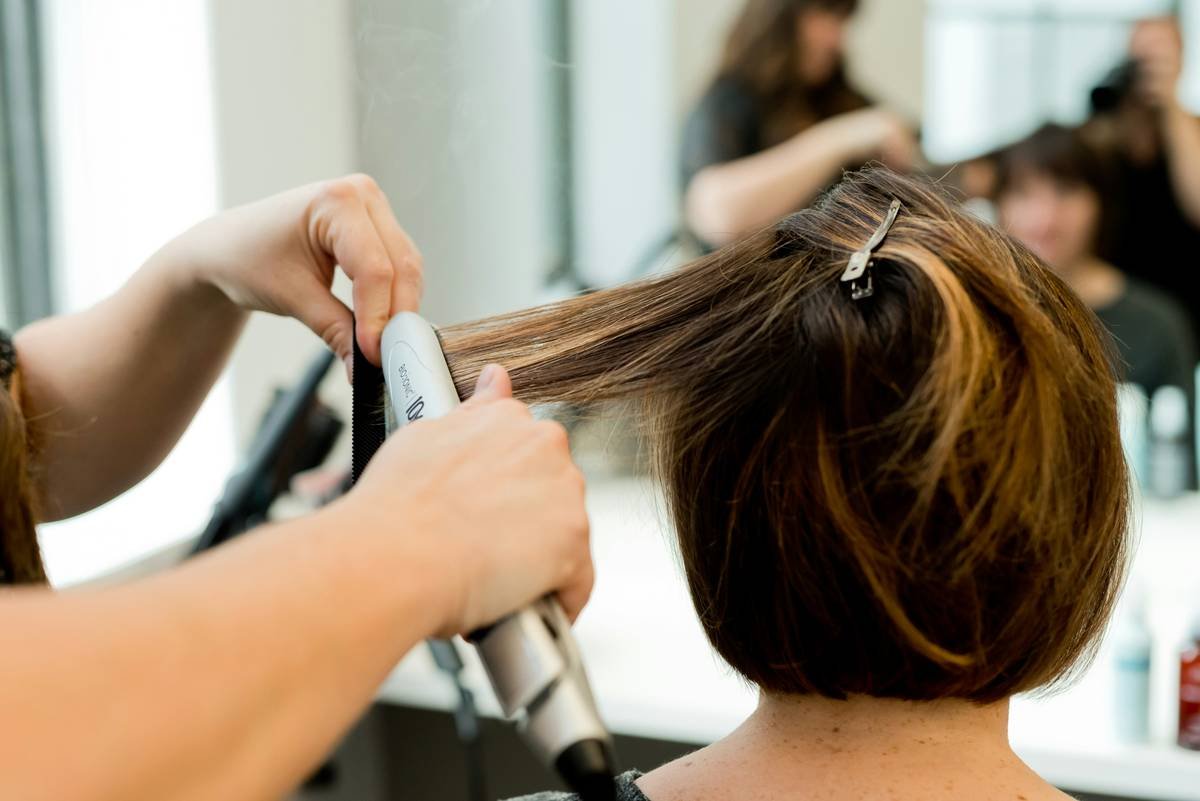
- Clamp the ends, then wrap upward toward the scalp—not downward (that creates kinks).
- Hold for the recommended time, then release gently—no tugging!
- Let curls cool completely before touching (hot curls stretch and lose shape).
- Finish with a flexible-hold aerosol spray like Moroccanoil Luminous Hairspray.
5 Expert-Backed Best Practices for Long-Lasting Curls
- Always use heat protectant: Products with argan oil or dimethicone create a thermal barrier. Skip this, and you’re literally cooking your cuticles.
- Go slightly smaller than you think: A 1” barrel gives more versatility than 1.25”—you can always loosen curls with fingers for beachy texture.
- Direction matters: Alternate curl direction (some forward, some back) for natural, non-helmet hair.
- Don’t curl freshly washed hair: Day-old hair has more grip. If you must wash, use dry shampoo at roots first.
- Clean your barrel monthly: Product buildup insulates heat unevenly. Wipe with alcohol on a cotton pad while cool.
TERRIBLE TIP DISCLAIMER: “Spray hairspray on the barrel before curling for extra hold.” NO. This creates sticky residue that burns onto your hair and smells like regret. Just… no.
Case Study: From Flat to Fabulous in 20 Minutes
Last fall, I worked with Maya, a 28-year-old teacher with fine, straight, color-treated hair that refused to hold any curl past 9 a.m. She’d been using a cheap 1.5” titanium wand at 400°F—her rationale: “Hotter = longer-lasting.” Result? Brittle ends and zero bounce.
We switched her to a 1” tourmaline-ceramic barrel (Bio Ionic Long Barrel Styler) set at 310°F. Used Redken Iron Shape 11 thermal protectant. Sectioned hair, wrapped away from face, held for 7 seconds. Let curls cool untouched. Finished with Bumble and Bumble Hairspray Strong Finish.
Outcome: Defined, shiny curls that lasted through parent-teacher conferences, recess duty, AND happy hour. 8+ hours of wear without drooping. She now texts me selfies titled “CURL POWER.”
FAQs About Curling Barrels Answered
Can I use a curling barrel on wet hair?
No! Applying heat to damp hair causes steam bubbles inside the hair shaft, leading to breakage (“bubble hair”). Always style on 100% dry hair.
What’s the difference between a curling iron and a curling wand?
Iron = clamp holds hair in place; ideal for beginners. Wand = no clamp, requires wrapping skill; creates more natural, piece-y texture.
How often can I safely use a curling barrel?
Limit to 2–3 times per week max. Daily heat styling leads to cumulative protein loss. Always pair with deep conditioning treatments.
Do automatic curling irons work better?
They’re convenient but often too tight for fine hair and can snag. Manual control gives you better tension and customization.
Conclusion
Your curling barrel isn’t just a tool—it’s your secret weapon for volume, texture, and confidence that lasts from sunrise to last call. Forget guessing games: match barrel size to your hair type, respect temperature limits, and treat curls like delicate soufflés (cool them undisturbed!). With the right approach, you’ll skip the flat iron tomorrow and strut out with bounce that actually sticks around.
Like a Tamagotchi, your curls need daily care—but unlike a Tamagotti, they won’t beep angrily if you forget. Probably.