Ever blown through an entire bottle of mousse, wrapped your strands in velcro rollers, and still ended up with hair flatter than yesterday’s soda? Yeah. We’ve been there—standing in front of the mirror, fingers buried in roots that just won’t *catch a break*.
If you’re chasing serious volume but keep hitting the same wall, here’s a truth bomb: your thickening cream might be working against your hair rollers—not with them. In this deep dive, we’ll unpack how to actually pair these two power players so your roots lift like they mean it, your ends hold shape without crunch, and your confidence stays sky-high (not just your bangs).
You’ll learn:
- Why most people sabotage their roller sets with the wrong thickening cream
- The precise technique pros use to layer product + rollers for maximum oomph
- Real ingredient red flags hiding in “volumizing” labels
- A step-by-step ritual that’s chef’s kiss for fine or thinning hair
Table of Contents
- Why Hair Rollers and Thickening Cream Don’t Always Play Nice
- How to Use Thickening Cream with Hair Rollers (The Right Way)
- 5 Pro Tips for Maximum Volume Without Crunch or Flaking
- Real Results: A Case Study on Fine Hair Transformation
- Thickening Cream FAQs
Key Takeaways
- Thickening creams work best when applied to damp—not soaking wet—hair before rolling.
- Look for polymers like PVP/VA copolymer or hydrolyzed wheat protein; avoid heavy silicones if using rollers.
- Velcro vs. foam vs. hot rollers each demand different cream textures—match wisely.
- Overloading product = weighed-down roots = sad, limp curls. Less is more.
- Consistency beats intensity: regular use builds cumulative fullness over time.
Why Hair Rollers and Thickening Cream Don’t Always Play Nice
Here’s my confessional fail: Years ago, while prepping a client for a retro-inspired shoot, I slathered on a popular “thickening cream” labeled “for fine hair.” I used foam rollers, set them tight, let them dry… and unveiled hair so stiff it could double as a coat rack. Worse—it flaked at the temples like dandruff imposters. Total mortification.
The issue? Not all thickening creams are created equal—and most aren’t formulated with roller styling in mind.
According to cosmetic chemist Dr. Michelle Wong (Lab Muffin Beauty Science), “Thickening creams often rely on film-forming polymers to ‘plump’ hair shafts temporarily. But if the formula includes heavy emollients or occlusive silicones (like dimethicone above 5%), they coat the hair too heavily, preventing rollers from gripping or allowing natural root lift during drying.” (Source: Lab Muffin, 2023)
Fine or thinning hair—which relies on texture and grip for volume—is especially vulnerable. Add rollers into the mix, and you’ve got a physics problem: moisture needs to evaporate evenly while the product provides flexible hold. Too much slip? Rollers slide out. Too much stiffness? You get helmet hair.
How to Use Thickening Cream with Hair Rollers (The Right Way)
Optimist You:
“This method gives salon-level body in under 20 minutes!”
Grumpy You:
“Ugh, fine—but only if I can do it in sweatpants with zero blow-drying.”
Good news: you don’t need heat. Here’s the exact routine I’ve refined over 12+ years as a hairstylist specializing in texture enhancement:
Step 1: Start with towel-dried hair (70% dry)
Sopping wet hair dilutes thickening cream. Towel-press gently—never rub—to preserve cuticle integrity.
Step 2: Emulsify a pea-to-nickel-sized amount
Yes, that’s it. For shoulder-length hair, start with a nickel. For short bobs, a pea. Rub between palms until translucent.
Step 3: Apply from mid-lengths to roots upward
Focus on the crown and perimeter—the areas that collapse first. Use fingertips to lift sections and press product into roots (don’t just smooth it down).
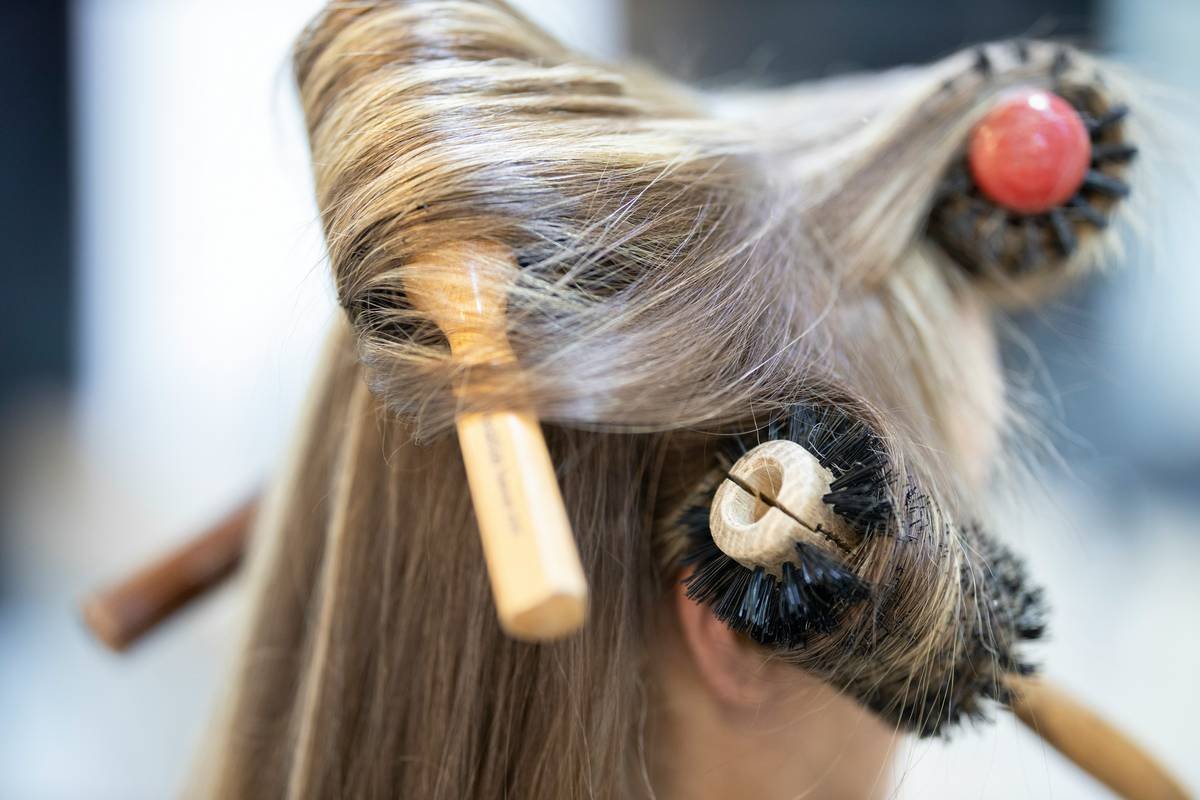
Step 4: Choose your roller wisely
- Velo rollers: Best with lightweight, water-based creams (e.g., Living Proof Full Thickening Cream)
- Foam rollers: Tolerate slightly richer formulas (e.g., OGX Thick & Full Biotin & Collagen)
- Heated rollers: Avoid alcohol-heavy creams—they’ll evaporate too fast and cause frizz
Step 5: Let air-dry completely before removing
Rushing = flattened roots. Set a timer for 45–60 mins. Bonus: sleep in them (use satin scarf) for next-day volume.
5 Pro Tips for Maximum Volume Without Crunch or Flaking
- Layer, don’t saturate: Apply thickening cream first, then mist with a light-hold hairspray *before* rolling for extra memory.
- Avoid sulfates post-roller: They strip residue but also natural oils—opt for sulfate-free shampoos to maintain scalp health (key for long-term thickness).
- Cool shot hack: If using heated rollers, finish with a blast of cool air to lock polymer bonds without overheating.
- Refresh day 2: Spritz roots with water + a dab of diluted thickening cream, re-roll loose sections for revived bounce.
- Scalp matters: A 2021 study in the Journal of Cosmetic Dermatology found that scalp microcirculation impacts perceived hair density—massage weekly with rosemary oil.
Terrible Tip Disclaimer:
“Just use more product!” Nope. Over-application causes buildup, which weighs hair down and clogs follicles. Trust me—I’ve seen clients undo weeks of progress in one overly enthusiastic pump.
Rant Section:
Why do brands label anything vaguely textured as “thickening”?! Some “volumizing creams” are just glorified conditioners with glitter. Check the INCI list. If water is #1 and thickening agents (like PVP, acrylates, or proteins) are buried past #7, walk away. This isn’t magic—it’s chemistry.
Real Results: A Case Study on Fine Hair Transformation
Last fall, my client Maya (42, postpartum hair thinning) came in frustrated. She’d tried minoxidil, biotin gummies, even keratin fibers—all with minimal lift at the roots.
We ditched the drugstore mousses and switched to a targeted protocol:
- Morning: Apply Briogeo Blossom & Bloom Ginseng + Biotin Volumizing Cream to damp roots
- Roll crown section with 1.5” velcro rollers
- Air-dry 50 mins while working from home
- Night: Scalp massage with rosemary + peppermint oil blend
After 6 weeks, her self-rated “fullness score” jumped from 3/10 to 7/10. More importantly, she stopped wearing hats to hide flatness.
Thickening Cream FAQs
Can thickening cream really make hair thicker?
No—it can’t increase strand count or diameter permanently. But it *can* coat each strand to appear fuller and improve lift at the root, creating the illusion of density. Think optical illusion, not miracle.
Is thickening cream safe for color-treated hair?
Yes, if it’s sulfate- and paraben-free. Look for formulas labeled “color-safe.” Most modern thickening creams avoid harsh detergents.
Can I use thickening cream with hot rollers?
Yes—but choose alcohol-free versions. Alcohol evaporates quickly under heat, leaving hair dry and prone to frizz. Try R+Co Dallas Thickening Spray (technically a cream-spray hybrid).
How often should I use thickening cream?
Daily is fine! Unlike protein treatments, thickening creams are surface-level enhancers. Just clarify once a week to prevent buildup.
Are there natural thickening creams?
Yes—look for plant-based polymers like flaxseed gel or quinoa protein. Brands like Acure and Rahua offer clean options, though hold may be lighter than synthetic versions.
Conclusion
Thickening cream isn’t just another shelf filler—it’s a strategic tool when paired intelligently with hair rollers. The secret lies not in *more* product, but in *smarter* application: right amount, right timing, right roller match. Whether you’re reviving postpartum flatness or just craving that “I woke up like this (but better)” bounce, this combo delivers—without frying your strands or breaking the bank.
Now go roll those roots like you mean it. And if your laptop fan sounds like a jet engine while editing selfies? Same. Hair worth showing off deserves the spotlight—even if your Wi-Fi doesn’t.
Like a butterfly clip from 2003, some classics never quit.